Thinking about a Japanese tattoo, or wondering what the kanji on your hoodie actually says? I’m K2, a native Japanese speaker who writes about Japanese fashion. A surprising number of “Japanese” tattoos and prints are actually Chinese characters, machine-translation mistakes, or words that sound strange to Japanese people. This page gives you two free tools: a word finder with correct Japanese for 70+ popular words, and a text checker that catches common character mistakes.
1. Japanese word finder
2. Japanese text checker
Paste the Japanese from your tattoo design, shirt or stencil. The checker flags Chinese-only characters, old forms, half-width katakana and other common problems.
Getting it inked? Have a native speaker check it first.
Send me your design or photo. I’ll check the meaning, nuance, character forms and orientation, and suggest natural alternatives.
Get a native check on Fiverr →7 common Japanese tattoo mistakes
- Chinese characters instead of Japanese. Japanese and Chinese share many characters, but not all. 爱 (love), 龙 (dragon) and 樱 (cherry blossom) are Chinese simplified forms. In Japanese they are 愛, 龍 and 桜.
- Machine translation picks the wrong word. English words often have several Japanese equivalents. “Strength” can come out as 強度, which means the strength of a material, not of a person.
- One kanji out of context. Some kanji only feel complete as part of a word. 強 alone reads like half a word to Japanese people.
- Mirrored or upside-down stencils. It happens more often than you think, especially with vertical text.
- Look-alike katakana. ツ and シ, ソ and ン are easy to mix up in names written in katakana.
- Wrong reading order. Vertical Japanese is read top to bottom, and columns go from right to left.
- Distorted handwriting. Brush styles drawn by someone who doesn’t write Japanese can turn one character into another. Always have the final design checked, not just the word.
FAQ
Q. What does the Japanese on my shirt mean?
Try pasting it into the text checker above, or search the word finder. If it is a longer phrase or the characters are hard to read, a native speaker can read it from a photo.
Q. Should my tattoo be in kanji, hiragana or katakana?
Kanji carry meaning and look bold, so they suit single words like 愛 or 龍. Hiragana looks softer and fits phrases. Katakana is mainly used for foreign words and names.
Q. Can I get my name in Japanese?
Names are usually written in katakana based on how they sound. Spelling a name in kanji is possible, but the meaning of each kanji matters, so ask a native speaker before inking.
This page is a free guide by a native Japanese speaker. The checker only catches common character-level problems. Always have your final design checked before getting a tattoo.
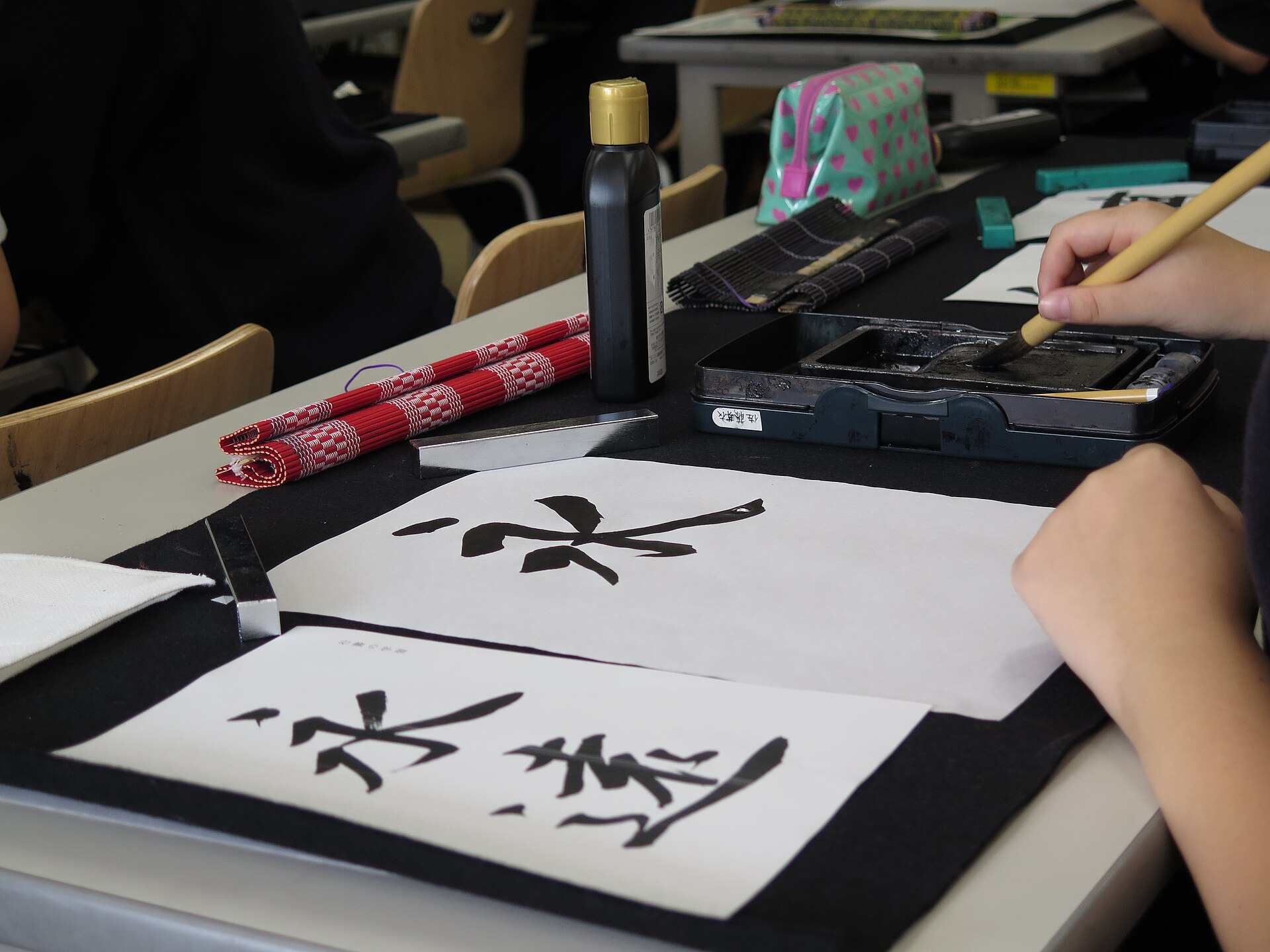
Featured image: Japanese calligraphy in action — photo by Douglas Perkins / Wikimedia Commons (CC BY 4.0)


コメント