※本記事はアフィリエイト広告(プロモーション)を含みます。
Ura-Harajuku, streetwear, DJing, hip-hop, sneaker collaborations. Trace almost any path in Japanese street culture back far enough, and you arrive at one person: Hiroshi Fujiwara.
Abroad he’s called “the Godfather of Streetwear,” and he has worked with Nike, Louis Vuitton and Moncler. But he started out as a teenager in Ise, Mie, obsessed with punk.
This article follows his story in order: his early years, bringing the culture he found in London and New York back to Japan, the birth of Ura-Harajuku, and fragment design.
View this post on Instagram
Post: @2ndstreet_official
2nd STREET’s official post on Ura-Hara classics, including GOODENOUGH, Head Porter and Levi’s Fenom — all projects Fujiwara was involved in.
- Who is Hiroshi Fujiwara?
- Timeline
- A boy from Ise discovers punk
- London: Malcolm McLaren and Vivienne Westwood
- New York: bringing hip-hop to Japan
- Tinnie Punx and MAJOR FORCE: the musician
- “LAST ORGY”: spreading the word through magazines
- GOODENOUGH: the brand without a name
- The birth of Ura-Harajuku: NIGO and Jun Takahashi
- fragment design: the lightning bolt
- Nike HTM and global collaborations
- Stores and media
- Fujiwara today
- What makes Hiroshi Fujiwara special
- FAQ
Who is Hiroshi Fujiwara?
| Born | February 7, 1964, Ise, Mie Prefecture |
| Roles | Musician, DJ, producer, designer |
| Known for | GOODENOUGH, fragment design, Nike HTM |
| Nicknames | “Godfather of Streetwear,” “Godfather of Ura-Harajuku” |
| Symbol | fragment design’s lightning-bolt logo |
Timeline
*Sources differ slightly on the year of the London trip and the start of fragment design (see below).
A boy from Ise discovers punk
Fujiwara was born in 1964 in Ise, Mie. As a teenager he fell for London punk rock — inspired by the Sex Pistols and The Clash, he dyed his hair. At 18 he moved to Tokyo and quickly became a standout on the streets of Harajuku.
London: Malcolm McLaren and Vivienne Westwood
After moving to Tokyo, Fujiwara went to London. He visited the shop of Malcolm McLaren and Vivienne Westwood, the shrine of punk, and met McLaren, the Sex Pistols’ manager, who reportedly suggested he go to New York. The punk spirit he saw there later fed into A.F.F.A., the brand he made with Jun Takahashi.
*Some sources date the London trip to 1982, others to 1985.
New York: bringing hip-hop to Japan
In the early 1980s in New York, Fujiwara encountered newborn hip-hop: records by Afrika Bambaataa and Grandmaster Flash, graffiti, breakdancing and baggy silhouettes. He bought records, came back and started playing them in Tokyo clubs, becoming one of Japan’s first hip-hop DJs. He is also credited with introducing early Beastie Boys and Run-D.M.C. records to Japan.
“In those days, people were really hungry for information.” — Hiroshi Fujiwara (Interview Magazine)
In an age without the internet, he saw, bought and carried back the latest culture from abroad with his own hands — a kind of “human internet” connecting Japan and the world.
Tinnie Punx and MAJOR FORCE: the musician
In 1985 Fujiwara formed Tinnie Punx with Kan Takagi, considered one of Japan’s first hip-hop acts. Their debut album was “Kensetsuteki,” with raps mixing English and Japanese, and they opened for the Beastie Boys on their first visit to Japan.
In 1988 he co-founded the indie label MAJOR FORCE with Toshio Nakanishi, K.U.D.O. and others. He went on to do many remixes and productions, working with artists such as UA, Kyoko Koizumi and Kahimi Karie. He released the solo album “Nothing Much Better To Do” in 1994, and in 2003 designed a guitar with Eric Clapton that Martin produced.
“LAST ORGY”: spreading the word through magazines
Just as important was “LAST ORGY,” his column with Kan Takagi in Takarajima magazine, covering the latest culture from New York, London, Paris and Los Angeles. It later became the TV show “LAST ORGY 2” — which was filmed by NIGO. Fujiwara was effectively a teacher passing overseas culture on to a younger generation. Shawn Stüssy also made him an honorary member of the Stüssy Tribe.
GOODENOUGH: the brand without a name
In 1990 Fujiwara started GOODENOUGH, after graphic designer SK8THING suggested making premium graphic T-shirts. Influenced by Stüssy and Britain’s Anarchic Adjustment, it mixed surf, BMX and hip-hop.
Remarkably, Fujiwara kept his name off GOODENOUGH: if he attached his name, he said, only people who liked him would buy it. With very limited distribution, GOODENOUGH became an “if you know, you know” legend.
More in the GOODENOUGH article.
The birth of Ura-Harajuku: NIGO and Jun Takahashi
Young talent gathered around Fujiwara, above all NIGO (later A BATHING APE) and Jun Takahashi (UNDERCOVER). The name “NIGO” is said to have been given by Fujiwara.
In 1993 NIGO and Takahashi opened “NOWHERE” in the Harajuku back streets, with Fujiwara’s backing; the name came from the Beatles’ “Nowhere Man.” From there A BATHING APE, UNDERCOVER and Tetsu Nishiyama’s brands spread, and the movement called Ura-Harajuku was born.
Around the same time Fujiwara and Takahashi made “A.F.F.A. (Anarchy Forever Forever Anarchy),” inspired by Westwood and McLaren’s punk clothing — their first real joint project.
See also HECTIC, BOUNTY HUNTER and Undercover.
fragment design: the lightning bolt
From the late 1990s, rather than growing his own brand, Fujiwara moved toward selling ideas to companies. The result was fragment design, known for its lightning-bolt logo — less a brand than a design studio and consultancy. Its way of working with other brands helped create today’s collaboration culture.
“I didn’t want to make a big company and have to hire lots of people.” — Hiroshi Fujiwara (via Hypebeast)
*Some sources date fragment design to 2003, others to the late 1990s.
Nike HTM and global collaborations
In 2002 Fujiwara launched “HTM” with Nike designer Tinker Hatfield and then-Nike executive Mark Parker — named after their initials. It produced special models using Nike technology, from the Air Presto to Flyknit. In 2014 came fragment design × Air Jordan 1, now part of sneaker history.
View this post on Instagram
Post: @ninetyfivers_official
In 2021 the triple collaboration Air Jordan 1 with Travis Scott also made headlines.
View this post on Instagram
Post: @rinkan_shibuya_bunkamuradori
View this post on Instagram
Post: @reisskicks
Other key collaborations
- Levi’s “Fenom”: a denim line in the mid-2000s
- Converse: from around 2010
- Louis Vuitton: the FW17 capsule with Kim Jones
- Moncler: the “Genius” project (from 2018)
- Starbucks: cups, cards and more, many times
- Takashi Murakami: the 2008 exhibition “Hi & Lo”
- Burton, A.P.C. and more: new collaborations keep coming
View this post on Instagram
Post: @hypebeastjp
View this post on Instagram
Post: @hypebeasthk
Stores and media
- THE POOL aoyama (2014): a store in a converted residential swimming pool; closed after about a year
- THE PARK·ING GINZA (2016): a store in a Ginza parking garage; closed after about a year
- THE CONVENI (2018): a convenience-store-style shop in the basement of Ginza Sony Park
- honeyee.com (2005): a web magazine launched with Hirofumi Kiyonaga of SOPHNET.
All of them temporary — very Fujiwara. He values what’s interesting right now over making things last.
Fujiwara today
Past 60, he hasn’t slowed down. In 2024 he released music with YOSHIKI as “Bluebyrds,” and in 2025 he launched “FRGMTmini,” a brand for kids and families. In June 2025, a Supreme × GOODENOUGH collaboration also arrived.
View this post on Instagram
Post: @supremenewyork
What makes Hiroshi Fujiwara special
To me, his greatest quality is that he doesn’t put himself in front. He hid his name at GOODENOUGH, works with other brands through fragment design, and backs the next generation — and yet he’s always at the very center of Japanese street culture. Punk, hip-hop, skate, sneakers: he takes culture from abroad, re-edits it with a Japanese sensibility and sends it back to the world. At the root of words like “Ura-Hara” and “archive,” there is always Hiroshi Fujiwara.
FAQ
Q. How old is Hiroshi Fujiwara?
He was born on February 7, 1964.
Q. What is “HTM”?
A special Nike line (since 2002) named after Hiroshi Fujiwara, Tinker Hatfield and Mark Parker.
Q. What is Ura-Harajuku?
A street fashion movement born in the back streets of Harajuku in the 1990s. The opening of NOWHERE in 1993 is seen as a key moment.
Search fragment design on Mercari Japan →
- Hiroshi Fujiwara (this article)
- GOODENOUGH
- HECTIC
- BOUNTY HUNTER
- C.E (CAV EMPT)
- UNDERCOVER history
- Brand quiz: are you the URAHARA STREET type?
Sources: Yokogao Magazine “Who is Hiroshi Fujiwara” and “Before Fragment Design” / Highsnobiety “How Hiroshi Fujiwara Changed Streetwear Forever” / Collater.al / Wikipedia “Hiroshi Fujiwara” / Hypebeast / sabukaru. Photos are embedded Instagram posts.
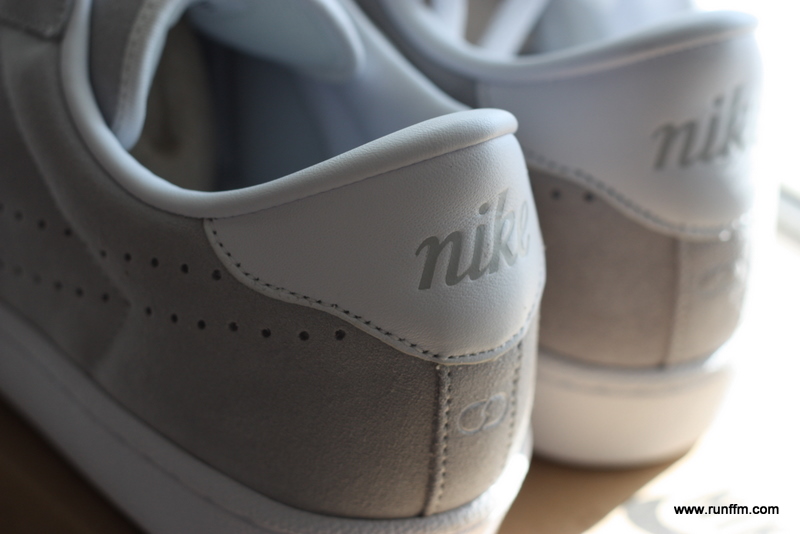
Featured image: fragment design Nike Zoom Tennis — photo by Christian H. / Wikimedia Commons (CC BY 2.0)


コメント