※本記事はアフィリエイト広告(プロモーション)を含みます。
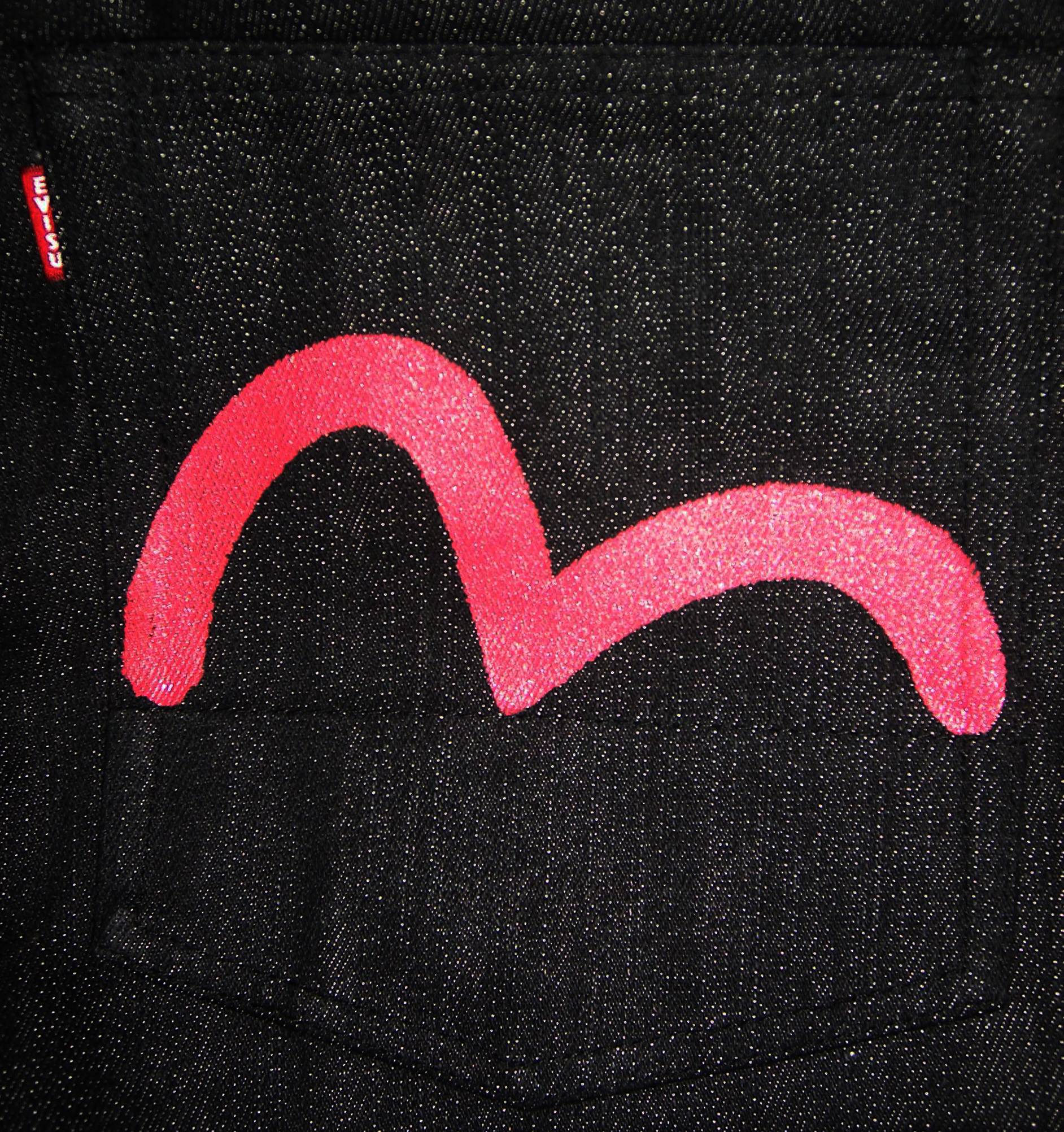
A big seagull painted across the back pockets. For many people overseas, that mark is Japanese denim. This is EVISU, the denim brand born in Osaka.
It started from a love of vintage Levi’s, spread to rappers in London and New York, and is now back in demand with a new generation through the Y2K revival. Here is the full story: how it began, the secret of the seagull, the classics, how to read lot numbers, how to avoid fakes, and the latest collaborations.
View this post on Instagram
Post: @frgsao_paulo
EVISU No.2 Lot.2001 in rigid (unwashed) denim. The seagull is the face of the brand.
- What is EVISU?
- Timeline
- Hidehiko Yamane and the beginning
- The name: take the “L” off Levi’s
- The seagull was “half joke”
- Going global: the jeans rappers saved up for
- The “Daicock” and the Y2K boom
- Classics
- Latest: EVISU × FAF × BEAMS T (released November 20, 2026)
- EVISU today
- How to read the details
- Tips for buying second-hand
- FAQ
What is EVISU?
| Pronunciation | “eh-vee-su” (Japanese: エヴィス) |
| Started | 1991, Osaka (some sources say 1988) |
| Founder | Hidehiko Yamane |
| Name | From Ebisu, the Japanese god of fortune. Originally “EVIS” |
| Icon | The seagull on the back pockets, originally hand-painted |
| Peers | One of the “Osaka 5”: Studio D’Artisan, Denime, Evisu, Full Count, Warehouse |
Timeline
Hidehiko Yamane and the beginning
Before EVISU, Yamane managed Lapine, an Osaka store famous among denimheads for its deadstock Levi’s. At a time when old Levi’s cost a fortune in Japan, brands like Studio D’Artisan and Denime had started making vintage-grade jeans from scratch. Yamane began making his own with a regular customer, Mikiharu Tsujita.
But Yamane wasn’t interested in copying old Levi’s exactly. That difference led Tsujita to leave and found Full Count, and the Shiotani brothers to found Warehouse. Together, these Osaka labels became known abroad as the Osaka 5.
The name: take the “L” off Levi’s
The first name was “EVIS,” after Ebisu, the fishing-rod-holding god of fortune and business. It was also a joke: remove the “L” from “Levi’s” and you get “EVIS.” As the brand grew, a “U” was reportedly added to become “EVISU” to avoid trouble with Levi’s.
The seagull was “half joke”
The seagull looks like Levi’s back-pocket arcuate stitching painted on with a brush. The first run of about 300 pairs was big and baggy, “American-style,” and Yamane painted the seagull on only some of them.
“The paint was half joke. I never thought anyone would buy them.” — Hidehiko Yamane (W. David Marx, Ametora, via Heddels)
The painted pairs were the first to sell, and soon the rest got seagulls too. In the early days the brand made about 14 pairs a day, and Yamane painted every seagull by hand. Because water-based paint soaks into the denim, each one is slightly different.
Going global: the jeans rappers saved up for
Britain’s Peter Caplowe, founder of the London store The Hub, partnered with Yamane to take EVISU to London and New York tastemakers. The oversized fit and a price far above other jeans made them aspirational, and by the early 2000s they were huge with American rappers and DJs.
Ametora author W. David Marx describes EVISU as the first Japanese denim brand to really sell Americans on Japanese denim as something worth saving for (via Heddels).
The “Daicock” and the Y2K boom
As popularity grew came the Daicock: a giant printed seagull covering the whole seat, often mistaken for a lowercase “m.” With DGK’s Stevie Williams skating in them in the early 2000s, they became a Y2K icon. Since around 2020 the Y2K revival has made the Daicock hot again, with overseas media crediting artists such as Travis Scott and Lil Uzi Vert for introducing it to a new generation.
View this post on Instagram
Post: @growaround
Daicock jeans and multi-pocket jeans, described by the shop as icons of Y2K hip-hop denim.
Classics
EVIS-era jeans (1990s)
Jeans from before the name change, labelled “EVIS,” are now collector’s items. Some even had a cinch back (buckle back) like vintage Levi’s.
View this post on Instagram
Post: @furugiluvr
View this post on Instagram
Post: @rallyvintage_
Lot.2000 and Lot.2001
EVISU’s core jeans go by lot numbers like Lot.2000 and Lot.2001. Resellers usually describe Lot.2000 as a regular fit and Lot.2001 as a relaxed fit. These combine with fabric numbers like No.1 or No.2, as in “No.2 Lot.2001.”
View this post on Instagram
Post: @ragfreak
Daicock jeans
Still the brand’s signature, and a regular sight in vintage shops worldwide.
View this post on Instagram
Post: @drip.check.baby
EVISU HERITAGE (AW2026)
The Daicock remains a staple today, including on white denim.
View this post on Instagram
Post: @loomosaka
Latest: EVISU × FAF × BEAMS T (released November 20, 2026)
Marking BEAMS’s 50th anniversary, EVISU, FAF and BEAMS T released a triple collaboration. FAF reworked silhouettes and details from EVISU’s archive and decorated the seagull in sequins (per Fashion Press).
| Item | Price (incl. tax) |
|---|---|
| Denim jacket with fur-trimmed hood | ¥79,980 |
| Denim pants (wide straight) | ¥59,180 |
| Zip-up hoodie (“stone wall camo”) | ¥43,450 |
| Shoulder bag (back-pocket motif) | ¥13,750 |
Available at EVISU Omotesando and Shinsaibashi, BEAMS T stockists, and both brands’ official online stores.
View this post on Instagram
Post: @evisu1991
EVISU today
The AW26 collection centres on 14.5oz “Tiger Selvedge Denim” with a yellow selvedge line, in trucker jackets and jeans. Recent collaborations include Palace, mastermind JAPAN and roarguns (per Complex). Founder Yamane retired from EVISU in 2022 and launched a new brand under his own name in 2024 (per Jing Daily).
How to read the details
- The seagull: early pairs are hand-painted, with soaked-in, uneven paint; many later models use a glossy print.
- Selvedge: fabric woven on old shuttle looms shows a selvedge edge when you turn up the hem.
- Lot numbers: check the tag for the lot (Lot.2000, Lot.2001) and fabric number (No.1, No.2).
- The name: “EVIS” labels are early pieces from before the name change.
Tips for buying second-hand
- Fakes are everywhere: especially Daicocks, faked since the 2000s. Be wary of prices that look too good.
- Check tags and hardware: ask for close-ups of the tag, rivets and button stamps.
- Sizing: many models are roomy, so check thigh and hem width as well as the waist.
- Buying from Japan: use a proxy service to buy from Mercari or Yahoo! Auctions; Japan has plenty in great condition.
Search EVISU on Mercari Japan →
FAQ
Q. What is the mark on the back pockets?
A seagull, originally hand-painted by Yamane. The giant printed version is called the Daicock.
Q. What are the “Osaka 5”?
Five denim brands from Osaka — Studio D’Artisan, Denime, Evisu, Full Count and Warehouse — that helped put Japanese denim on the world map.
Q. Can I still buy EVISU?
Yes. EVISU is still running, with stores in Omotesando and Shinsaibashi. 90s and 2000s pieces can be found second-hand.
Sources: Heddels “Evisu, Behind the Outsider of the Osaka 5” / Fashion Press EVISU brand page and EVISU × FAF × BEAMS T news / Complex “EVISU Autumn/Winter 2026” / Culted “The Y2K Resurface of EVISU’s Daicock Denim” / Jing Daily / Wikipedia “Evisu”. Photos are embedded Instagram posts.
Featured image: the EVISU seagull — photo by Marubatsu / Wikimedia Commons (public domain)


コメント